
AI-Powered Lead Generation for Local Businesses
Learn how AI chatbots and automation workflows capture, qualify, and nurture leads 24/7 — turning your website into a lead generation machine.
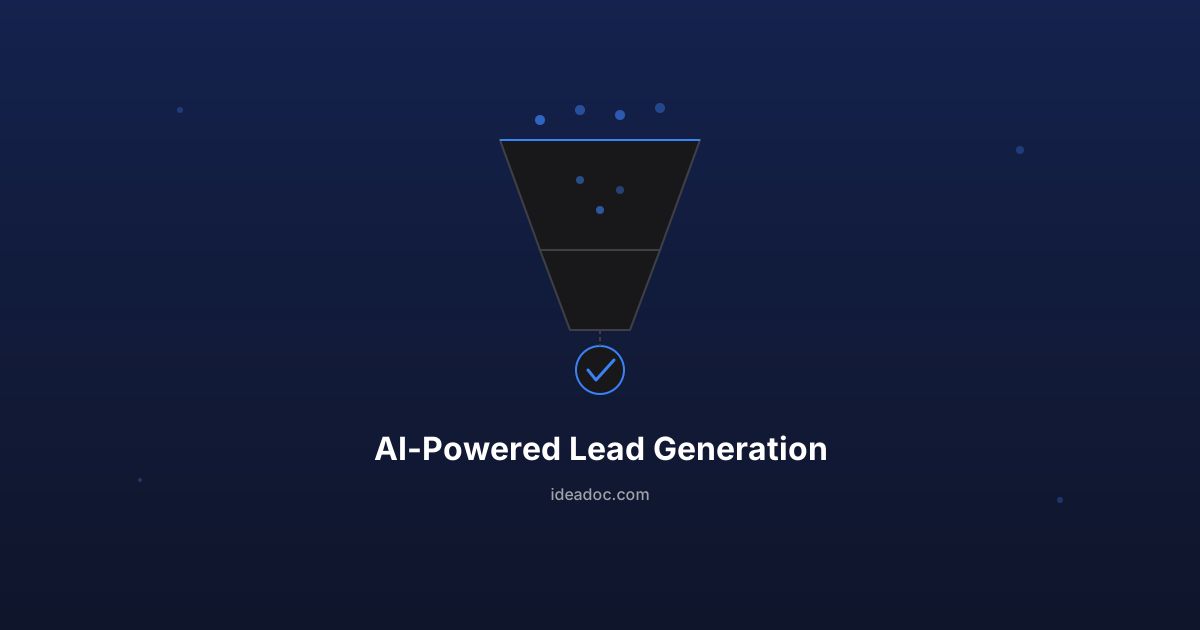
The Lead Generation Challenge for Local Businesses
You are spending money to drive people to your website — Google Ads, SEO, social media, word of mouth. Traffic is coming in. But here is the uncomfortable truth: 95 to 98 percent of website visitors leave without taking any action. No form submission. No phone call. No booking. They browse, they leave, and you never hear from them.
For local businesses operating on tight margins, this is a massive problem. Every visitor who leaves without converting represents real marketing dollars wasted. Traditional solutions — contact forms, phone numbers on the page, "Request a Quote" buttons — rely on the visitor being motivated enough to reach out on their own. Most are not.
AI-powered lead generation flips this dynamic. Instead of waiting for visitors to come to you, intelligent systems engage them proactively, qualify their needs in real time, and guide them toward conversion. The result is more leads from the same amount of traffic, captured and nurtured automatically around the clock.
How AI Captures Leads Your Current System Misses
Proactive Engagement
A traditional website is passive. It presents information and hopes the visitor acts. An AI chatbot is active. It initiates conversation at the right moment — after a visitor has spent 30 seconds on your pricing page, when they scroll to the bottom of a service description, or when they show exit intent by moving toward the browser's close button.
The engagement is contextual, not annoying. Instead of a generic "How can I help you?" popup, the chatbot references what the visitor is looking at. On your HVAC services page, it might ask "Thinking about a new system or need a repair?" On your pricing page, it might offer "I can put together a custom quote based on your specific situation."
This contextual approach converts at 3 to 5 times the rate of traditional contact forms because it reduces friction and meets the customer where they are in their decision process.
Real-Time Qualification
Not all leads are equal. A homeowner ready to book a service this week is far more valuable than someone casually researching options for next year. Manual lead qualification is time-consuming and often inconsistent — whoever happens to answer the phone or check the inbox first determines how the lead is handled.
AI qualification happens during the initial conversation. Through a series of natural, conversational questions, the chatbot determines:
- What service the visitor needs (specific service vs. general inquiry)
- Their timeline (urgent, this week, this month, just researching)
- Their budget expectations (aligned with your pricing or likely a mismatch)
- Their location (within your service area or not)
- Decision stage (comparing options, ready to buy, just gathering information)
Based on these signals, each lead receives a qualification score that determines what happens next. Hot leads get immediate attention. Warm leads enter a nurture sequence. Cold leads receive educational content that keeps your business top of mind.
After-Hours Capture
For most local businesses, 40 to 60 percent of website traffic occurs outside business hours — evenings, weekends, and holidays. If your only conversion mechanism is a phone number or a contact form that gets checked Monday morning, you are losing nearly half your potential leads.
An AI chatbot works identically at 2 AM on a Saturday as it does at 10 AM on a Tuesday. It engages visitors, qualifies their needs, answers their questions, and either books them directly into your calendar or captures their information for prompt follow-up. The businesses that respond first win the customer, and AI ensures you always respond first.
The AI Lead Nurture Engine
Capturing a lead is only the beginning. The real value of AI-powered lead generation is what happens after the initial contact.
Instant Response Sequences
When a lead is captured — whether through the chatbot, a form submission, or a phone inquiry — the automation system triggers immediately. Within seconds, the lead receives a personalized acknowledgment. This is not a generic "Thanks for reaching out" email. It references their specific inquiry, confirms the details they provided, and sets expectations for next steps.
Speed matters enormously. Research from Harvard Business Review found that businesses that respond within five minutes are 100 times more likely to connect with a lead compared to those that wait 30 minutes. AI automation makes sub-minute response times the default, not the exception.
Intelligent Follow-Up Sequences
After the initial response, AI-driven nurture sequences continue the conversation over days and weeks. These sequences adapt based on the lead's behavior:
- Engaged leads who open emails and click links receive more specific content and stronger calls to action, like direct booking links
- Passive leads who have not engaged receive different content designed to re-spark interest — case studies, testimonials, limited-time offers
- Stale leads who have gone quiet for an extended period receive a final reactivation message before being moved to a long-term nurture track
Each touchpoint is personalized to the lead's original inquiry, their qualification score, and their engagement history. The system handles this for hundreds of leads simultaneously without dropping a single follow-up.
CRM Integration and Lead Scoring
Every interaction — chatbot conversations, email opens, link clicks, page visits, form submissions — feeds into a centralized lead scoring model in your CRM. This creates a comprehensive picture of each lead's readiness to buy.
Your team sees a prioritized dashboard. The leads most likely to convert are at the top, with full context from every interaction. Instead of calling through a list alphabetically or by submission date, your sales efforts focus on the opportunities with the highest probability of closing. This is the type of automation that delivers the highest ROI for small businesses.
Real Numbers: What AI Lead Generation Delivers
The metrics from businesses that have implemented AI-powered lead generation are consistent across industries:
- Conversion rate improvement: Website visitor-to-lead conversion typically increases from 2 to 3 percent to 8 to 15 percent with proactive AI engagement
- Response time: Average lead response time drops from 4 to 24 hours to under 60 seconds
- Lead-to-customer conversion: 30 to 50 percent improvement when leads are qualified and nurtured automatically vs. manual follow-up
- Cost per acquisition: 25 to 40 percent reduction as existing traffic converts at higher rates, reducing the need for additional ad spend
- After-hours capture: 35 to 50 percent of total leads come from conversations that happen outside business hours
For a local business spending $2,000 per month on Google Ads with a 2 percent conversion rate, improving that rate to 8 percent with AI chatbot engagement means 4 times more leads from the same ad spend. That is not a marginal improvement — it is transformative.
Building Your AI Lead Generation System
Step 1: Audit Your Current Funnel
Before adding AI to your lead generation process, understand where you are today. Track these numbers for 30 days:
- Total website visitors per month
- Current conversion rate (leads divided by visitors)
- Average response time to new inquiries
- Lead-to-customer close rate
- Percentage of traffic outside business hours
- Top pages by traffic volume (these are your highest-impact chatbot deployment points)
These baseline metrics let you measure the real impact of AI implementation rather than relying on gut feeling.
Step 2: Define Your Qualification Criteria
What makes a good lead for your business? Map out the specific questions and criteria that separate a high-value prospect from a casual browser. This becomes the foundation for your chatbot's qualification flow.
Be specific. "Someone who needs our service" is too vague. "A homeowner within 25 miles who needs HVAC service within the next 30 days and owns a system more than 10 years old" is a qualification criteria that drives real prioritization.
Step 3: Design the Conversation Flows
The chatbot needs to qualify leads without making the conversation feel like an interrogation. The best approach is to alternate between providing value and gathering information. Answer a question, then ask one. Offer a helpful insight, then request a detail. This reciprocal pattern keeps leads engaged through the qualification process.
Step 4: Build the Automation Backend
Connect your chatbot to your CRM, email marketing platform, and scheduling system. Map out the automated sequences for each lead score tier — what happens immediately, what happens after 24 hours, after three days, after a week. Define the handoff point where a human takes over.
Step 5: Launch, Measure, Optimize
Deploy the system on your highest-traffic pages first. Monitor the conversations daily for the first two weeks, looking for questions the chatbot handles poorly, drop-off points in the qualification flow, and leads that convert vs. those that do not. Use this data to refine the system continuously.
The Competitive Advantage Window
AI-powered lead generation is still in the early adoption phase for local businesses. Most of your competitors are still relying on contact forms and hoping their phone gets answered. The businesses that implement intelligent lead capture and nurture systems now build a significant advantage — they capture more leads, respond faster, follow up more consistently, and close at higher rates.
That advantage compounds over time. Every captured lead that your competitor missed is a customer relationship that grows through referrals and repeat business. Every automated follow-up that would not have happened manually is a deal that would have otherwise been lost.
The technology is accessible and affordable for businesses of every size. The question is not whether AI lead generation works — the data is clear on that. The question is whether you implement it before or after your competitors do.
Ready to turn your website into a 24/7 lead generation machine? Schedule a free consultation and we will show you exactly where AI can capture the leads you are currently missing.
Get AI tips for your business
Join small business owners getting weekly insights on AI automation, chatbots, and growth strategies. No spam, unsubscribe anytime.
Related Articles
How Small Businesses Are Using AI to Transform Customer Service
Discover how small businesses use AI chatbots, voice agents, and automation to deliver fast, consistent customer service — without a large support team.
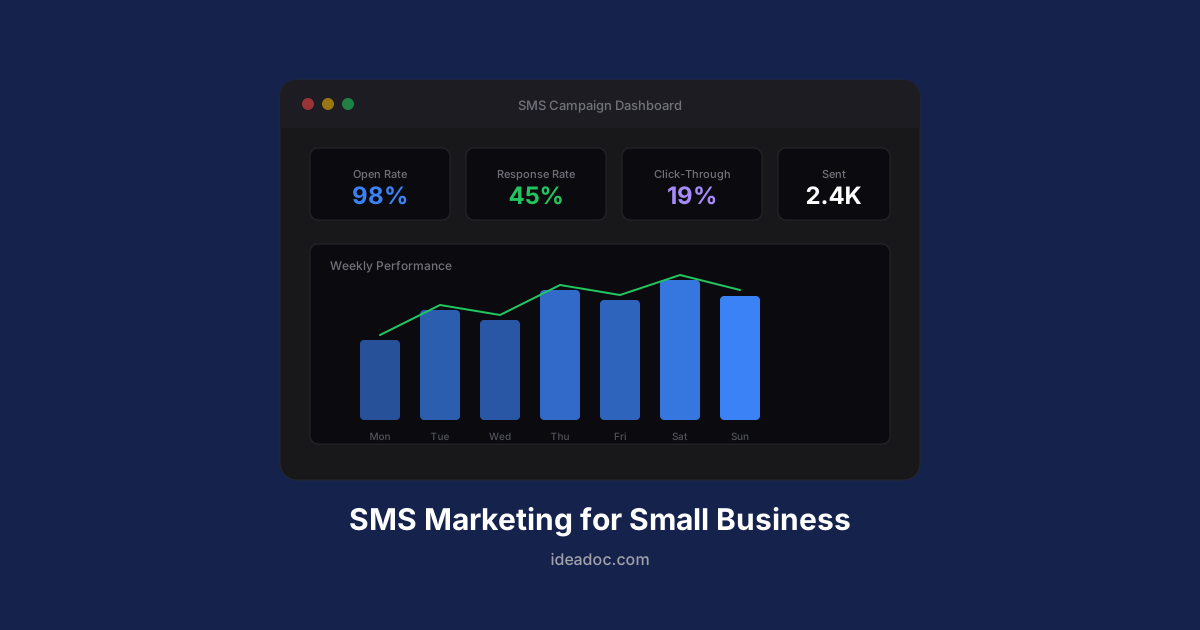
SMS Marketing for Small Business: 98% Open Rates and How to Get Started
SMS marketing delivers 98% open rates and 45% response rates — far outperforming email. Learn how small businesses can use text message campaigns for appointment reminders, promotions, and review requests.
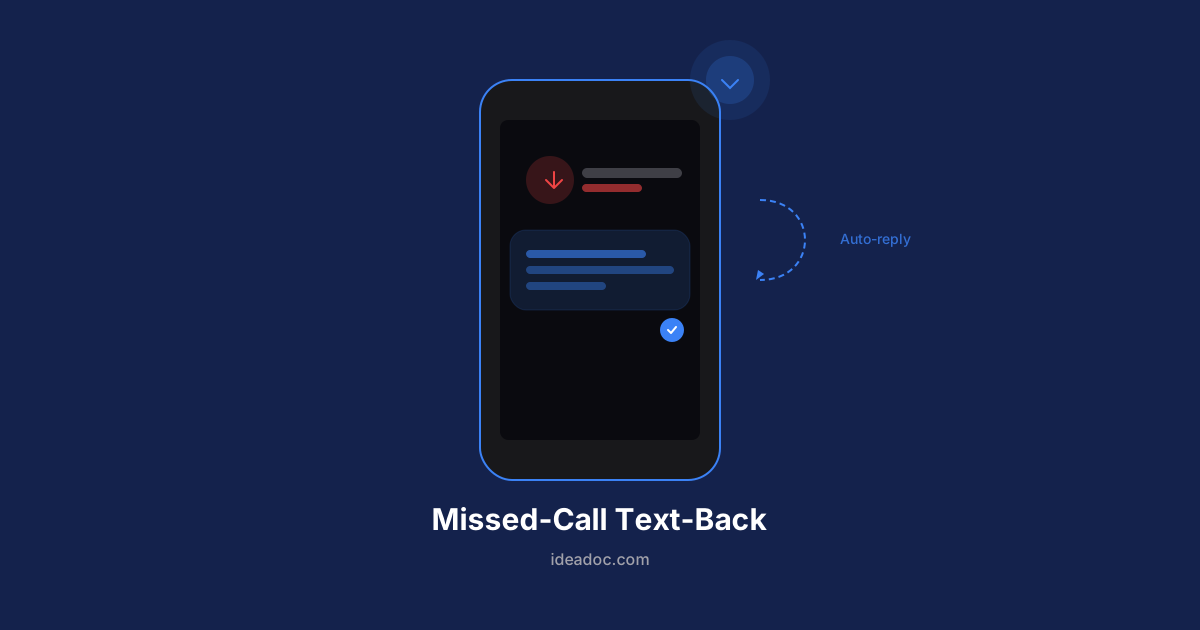
How Missed-Call Text-Back Can Recover $10K+/Year in Lost Revenue
Most small businesses miss 30-60% of inbound calls. Missed-call text-back automatically texts callers you can't answer — recovering leads that would otherwise go to your competitor.